Cosmetic Dentistry
Porcelain Veneers
Thin, laboratory-made porcelain facings bonded to the front of the teeth.
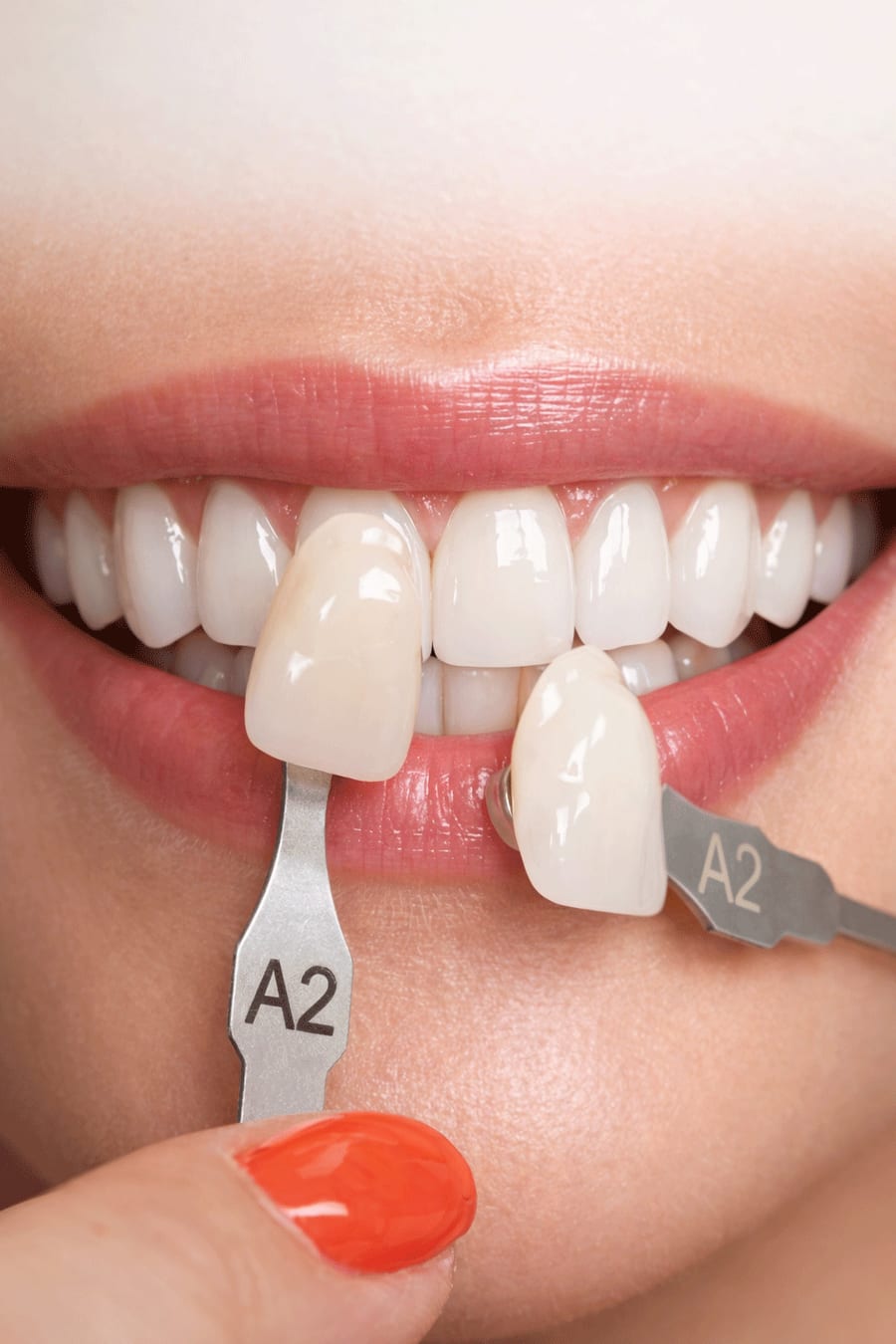
Learn more about Porcelain VeneersA careful, additive way to refine the shape and colour of your front teeth, usually shaped by hand in a single appointment.
Composite veneers use a tooth-coloured resin, applied and shaped directly onto the surface of your teeth. Because the material is built up in layers by hand, your dentist can adjust shape, length and shade as they work, with you looking in the mirror.
They are often chosen for small chips, uneven edges, gaps between teeth, or teeth that feel too short or an irregular shape. The amount of natural tooth that needs to be prepared is usually less than with porcelain, though this depends entirely on your own teeth.
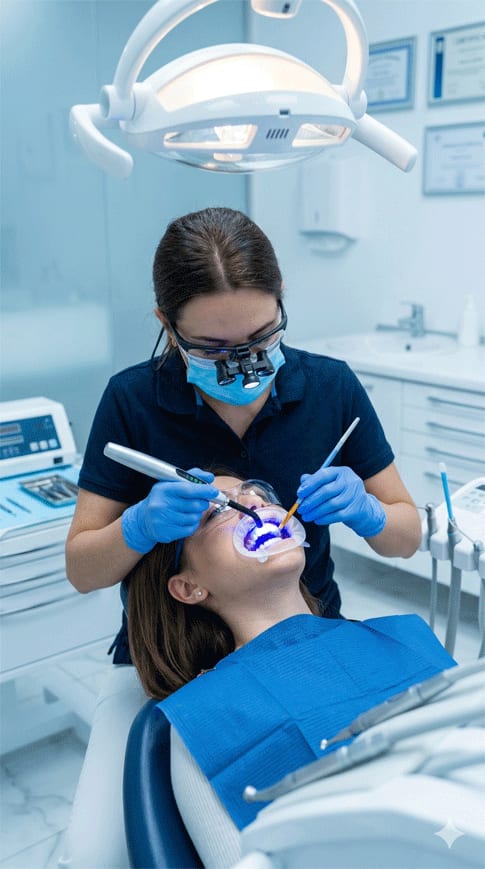
Built up and adjusted during the appointment, so you can see the shape developing.
Often requires less preparation of the natural tooth than porcelain, depending on the case.
Composite can generally be added to, reshaped or polished if it chips.
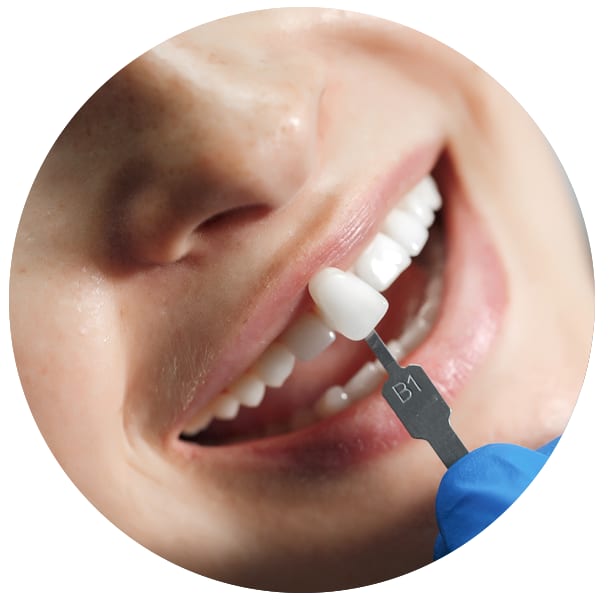
Layered to blend with the teeth either side rather than stand out from them.
We look at your teeth and gums and talk through what you would like to change.
Shape, length and shade are discussed, along with what is realistic for your teeth.
Minimal preparation where needed, then the surface is conditioned for bonding.
Composite is applied in layers, shaped and cured.
Final polish, a check of your bite, and a review appointment.
Composite veneers may suit you if you would like to change the shape, edges or shade of teeth that are otherwise healthy. Active decay or gum disease needs treating first, and heavy grinding or clenching can shorten how long the result lasts. Whether they are right for you is a decision for your dentist after examining your teeth.
Often completed in one appointment, though more teeth means more time. Your dentist will confirm at consultation.
Brush and floss as normal. Composite can pick up staining from tea, coffee, red wine and smoking over time.
Polishing at hygiene visits helps keep the surface bright. Repairs and additions are possible.
Composite is not as hard as porcelain and may need more upkeep over the years. If you grind your teeth, tell your dentist.
Photography from the practice’s own image library.
If your question is not here, please ask when you contact the practice.
Composite veneers are often placed with little or no preparation, but it depends on the position and shape of your teeth. Your dentist will explain exactly what is planned before anything is started.
This varies a great deal between patients, depending on your bite, your habits and how you care for them. Your dentist will give you a realistic expectation for your own teeth rather than a fixed figure.
Composite does not lighten with whitening gel in the way natural enamel does. If you are considering whitening as well, it is usually done first so the composite can be matched to the new shade.
They can, particularly with tea, coffee, red wine and smoking. Regular hygiene visits and polishing help.
Most people find it straightforward. If preparation is needed, local anaesthetic can be used. Tell your dentist if you are anxious and they will take it at your pace.
Thin, laboratory-made porcelain facings bonded to the front of the teeth.
Learn more about Porcelain Veneers
Professionally supervised whitening, using custom trays made to fit your teeth.
Learn more about Teeth Whitening
Clear removable aligners that move teeth gradually into a planned position.
Learn more about InvisalignTell us a little about what you need and we will call you back to arrange a time.
Liphook sits just off the A3, which bypasses the village — so the practice is straightforward to reach from both Guildford and Petersfield. Leave the A3 at the Liphook turning and follow signs into the village centre; Haslemere Road runs from The Square towards Haslemere.
To confirm: the exact approach you would like described from the north and from the south, and any local landmark to turn at.
For turn-by-turn directions from wherever you are, use the button below — it always reflects live traffic.
Liphook station is on Station Road, Liphook, GU30 7DR, on the Portsmouth Direct Line and managed by South Western Railway.
To confirm: the walking time from the station to 6 Haslemere Road.
Liphook is served by Stagecoach South. The Square, in the village centre, is the main stop and the closest to Haslemere Road.
Timetables change — please check with Stagecoach before travelling, and confirm the walking time from The Square.
Parking behind the practice is free. The car park is directly behind us on Haslemere Road — coming from the village, it is just before you reach Sainsbury's.
There is no charge and no ticket machine, so you can come straight in.
If you are arriving by train instead, the station car park on Station Road has 74 pay-and-display spaces, currently around £5.10 for the day.
To confirm: whether any of the bays behind the practice are marked as blue badge spaces, so we can say so here.
We are at 6 Haslemere Road, a short distance from The Square — the centre of Liphook and the main bus stop. Liphook railway station is on Station Road, and Sainsbury's is a useful landmark on the village's northern side.
To confirm: walking times from The Square and the station, the nearest recognisable landmark to the door, and step-free access details.
The map below shows exactly where we are.
Liphook Smile Studio
6 Haslemere Rd, Liphook, GU30 7AL
Monday to Friday
9:00am – 5:00pm
Closed Saturday & Sunday
Book a consultation and we will assess your teeth and set out your options honestly.